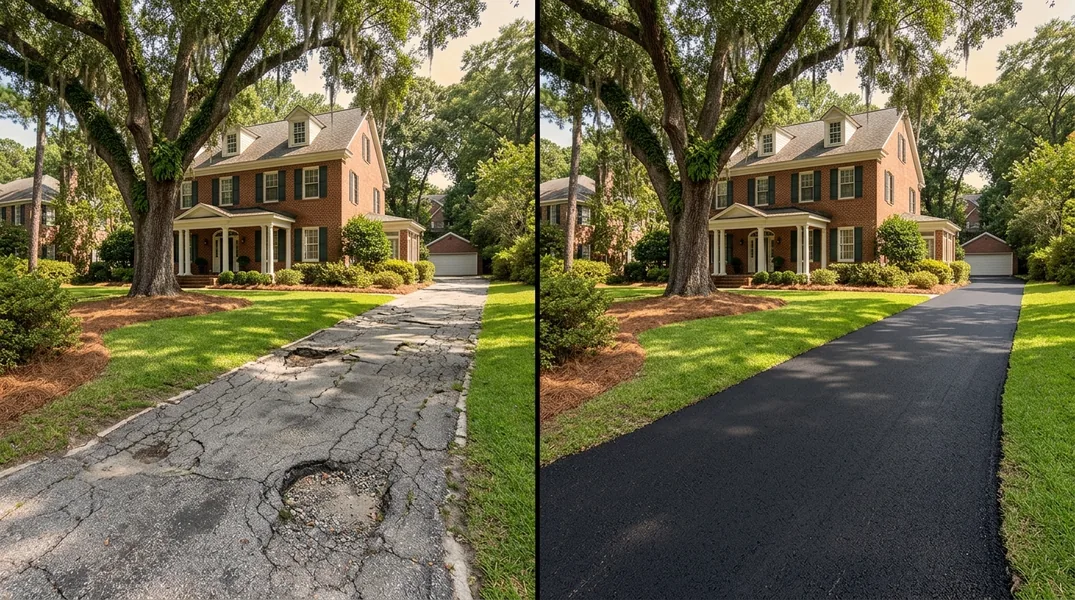
Why Columbia Driveways Struggle with Drainage After Heavy Summer Storms
Summer storms in Columbia can be intense and unpredictable. When heavy rain falls on your driveway, the water has nowhere to go if proper drainage infrastructure isn't in place. Many homeowners discover this problem only after a major downpour, when they notice water pooling on the surface or washing away the sand and gravel base beneath the asphalt. This isn't just an inconvenience; it's a serious threat to the longevity of your driveway.
The issue becomes especially problematic in areas where the ground slopes toward the home or where the driveway sits in a low spot. Without adequate drainage, water seeps into the base layer, weakening the foundation that supports your asphalt. Over time, this moisture causes the subgrade to shift and settle unevenly, leading to cracks, potholes, and costly repairs. Understanding how water moves across and beneath your driveway is the first step toward protecting this major investment in your property.
Water Pooling on Your Driveway: What's Really Happening Below the Surface
When you see water pooling on your driveway, you're witnessing the result of improper grading, compacted soil, or an inadequate base layer. The asphalt itself is not porous, so water cannot drain through it. Instead, water must flow off the sides or find its way through cracks and seams to the layers beneath. If your driveway was installed without proper slope or drainage planning, rainwater simply sits on the surface until it evaporates or finds a weak point to penetrate.
The real damage happens when water enters the base layer. Beneath your asphalt lies a foundation of crushed stone, gravel, or recycled asphalt. This base is designed to be stable and well-compacted, but when water saturates it, the material loses its structural integrity. Freeze-thaw cycles in cooler months make this worse, as ice expands and contracts, further destabilizing the foundation. Once the base fails, the asphalt above it begins to crack, heave, and deteriorate rapidly. This is why addressing water pooling early is so important for extending the life of your driveway.
Driveway Drainage Solutions: French Drains and Trench Drains Explained
If you're experiencing drainage problems, two proven solutions can redirect water away from your driveway: the driveway french drain and the trench drain driveway system. A French drain is a subsurface drainage system that uses a perforated pipe buried beneath or alongside your driveway. This pipe is surrounded by gravel and landscape fabric, allowing water to flow into the pipe and be directed away from your property. French drains work by gravity and are particularly effective for managing groundwater and preventing it from pooling on the surface.
A trench drain driveway system, by contrast, is a surface-level solution that catches water before it pools. These drains are installed along the edges or at low points of your driveway and funnel water into an underground pipe system. Trench drains are ideal when you have significant grading issues or when water consistently collects in specific areas. Both systems can be integrated into Asphalt Driveway Paving & Installation projects, either during new construction or as part of a Driveway Repair initiative. The choice between them depends on your specific site conditions, budget, and the severity of your drainage problem.
Sand and Base Layer Erosion: The Hidden Cost of Poor Drainage
One of the most visible signs of drainage failure is the washed-out sand and gravel base beneath your driveway. After a heavy summer storm, you may notice that the edges of your driveway have settled or that sand is visible at the perimeter. This erosion occurs when water flows across and under your driveway, carrying away the fine particles that hold the base layer together. Once the sand is gone, larger stones shift and compact unevenly, creating a weak foundation for the asphalt above.
This erosion accelerates the development of potholes and cracks. When vehicles drive over sections with compromised bases, the asphalt flexes and breaks more easily. What might have been a small drainage issue becomes a major structural problem requiring expensive Pothole Repair & Asphalt Patching or even complete resurfacing. The good news is that erosion can be prevented with the right drainage solutions installed at the time of driveway construction or during a timely repair project. Addressing this issue now saves you thousands of dollars in future repairs.
Protecting Your Driveway: Installing Proper Drainage During Paving
The best time to address driveway drainage is during initial installation. When Columbia Asphalt Paving installs a new driveway, we assess the site's natural slope and water flow patterns to determine the most effective drainage strategy. Proper grading ensures that water flows away from your home and driveway rather than toward it. We also design and install the appropriate base layers with adequate compaction and, when necessary, integrate French drains or trench drains into the system from the start.
If your driveway already exists and is experiencing drainage problems, you still have options. Asphalt Resurfacing & Overlay projects can include drainage improvements, and targeted repairs can address specific problem areas. In some cases, adding a trench drain system or improving site grading can solve the issue without requiring complete replacement. The key is to act before water damage becomes extensive. If you're noticing pooling water or erosion around your driveway, contact Columbia Asphalt Paving for a professional assessment and free estimate to discuss your options.
Driveway Drainage Solutions Near Me: When to Call Columbia Asphalt Paving
If you live in Columbia and your driveway is showing signs of drainage problems, the time to act is now. Summer storms are predictable, and the damage they cause is preventable with proper drainage solutions. Whether you need a French drain installation, a trench drain system, or a comprehensive driveway repair, Columbia Asphalt Paving has the expertise and experience to solve your problem.
Our team understands the unique climate and soil conditions in the Columbia area, and we design driveway solutions that work specifically for local conditions. We've helped hundreds of homeowners protect their driveways from water damage, and we can help you too. Don't wait for the next big storm to discover that your driveway needs drainage work. Call Columbia Asphalt Paving today at (803) 661-0887 or visit our website to schedule your free consultation. We'll assess your driveway, explain your options, and provide a clear plan to keep your asphalt safe and dry for years to come.
Looking for a professional asphalt paving contractor in Columbia? Columbia Asphalt Paving responds fast for all your asphalt paving needs.
Get a Free Quote