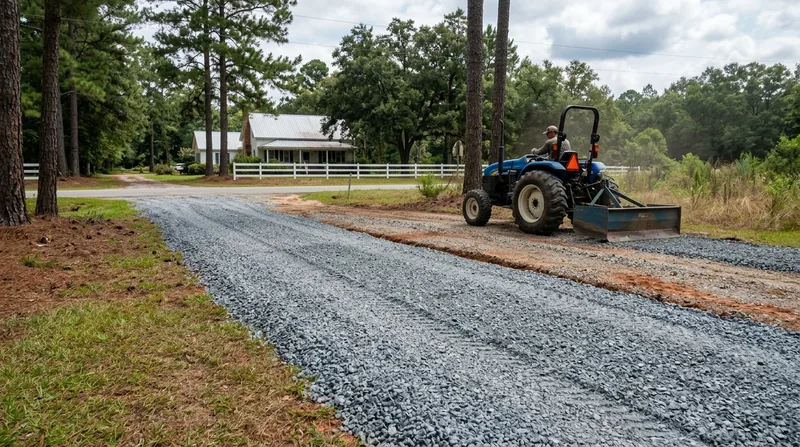




Gravel drives outside the Columbia core loosen fast once summer thunderstorms and pickup traffic wash out the crown. Gravel driveway installation and grading in Columbia means reshaping the surface, adding fresh stone, and pitching it to shed water instead of holding it in the sandy soil below. The Midlands terrain runs from loose Sandhills sand south and east of the city to red Piedmont clay north and west along the Fall Line where the Broad and Saluda meet the Congaree. Rural farmhouses and peach orchards around Gilbert and Newberry, lake homes on Lake Murray with long sloped drives to the water, and horse farms with tree-lined lanes around Camden all depend on gravel lanes that hold up to seasonal washout and heavy use. We reshape and regrade those drives to last, without the cost of asphalt or the upkeep of tar and chip. Call us at (803) 661-0887 for a free written estimate with tonnage specs.
Why Gravel Driveway Grading Matters in Columbia's Rural and Lake Communities
Summer thunderstorms in the Midlands drop heavy rain in short bursts, and sandy or clay soils drain poorly when the crown of a gravel drive flattens out. Water pools, ruts deepen, and the stone migrates to the edges under truck and car traffic. Reshaping the driveway to pitch water away from the center, compacting the subgrade, and adding fresh crushed stone or recycled millings restores drainage and extends the life of the lane by years. Grading also prevents washout at the apron where the drive meets the road, a common failure point on rural properties in Lexington, Irmo, and Blythewood.
- We reshape the crown to pitch water toward the shoulders instead of holding it in the soil.
- We compact and proof-roll the subgrade to create a stable base that resists ruts and washout.
- We add fresh crushed stone or recycled asphalt in the correct depth and gradation for drainage and wear.
- We establish proper slope at the apron and culvert to prevent erosion and standing water.
- We grade side ditches or swales where needed to direct runoff away from the drive and structures.
Proper grading is the difference between a drive that holds for five years and one that fails in two. For more detail on asphalt driveway paving and installation as an alternative to gravel, see our full service overview.
Key info: Lake Murray homes and rural properties in Gilbert and Newberry often use gravel lanes because they are lower cost upfront and easier to repair after washout. Proper crown and slope prevent the pooling that kills stone and subgrade in the Midlands heat and humidity.
South Carolina law requires a utility locate before any excavation. Call 811 before we grade or prepare the drive, or we handle the request for you. Check with your local municipality (Columbia, Lexington, Irmo, or your township) for any apron or culvert permits, as rules vary by jurisdiction.
How We Grade and Install Gravel Driveways in the Columbia Area
We begin with a site walk to assess the slope, drainage, soil type, and existing stone condition. We measure the drive, note any low spots or erosion, and plan the crown pitch and shoulder drop. We then clear the drive of loose or displaced stone, compact the subgrade with a vibratory roller, add fresh stone in the correct depth (typically two to three inches of compacted crushed stone or recycled asphalt), reshape the crown, and pitch the shoulders. The entire job takes one to three days depending on length and access.
- We measure and map the drive, identify drainage issues, and assess soil type and existing base.
- We clear loose or rut-damaged stone and rake the subgrade clean.
- We compact the subgrade with a walk-behind or towed vibratory roller to create a firm foundation.
- We deliver and spread fresh crushed stone or recycled asphalt millings in the specified depth.
- We shape the crown and pitch the shoulders to direct water toward the edges.
- We compact the finished surface with a roller to lock the stone in place.
The result is a drive that sheds water, resists ruts, and holds stone in place through the next rain season. For properties considering a long-term surface, tar and chip driveways offer a step up from gravel with lower cost than asphalt.
Example: A horse farm near Camden with a 400-foot tree-lined drive to the rear barn had rutted badly after spring rains. We graded the entire lane, added three inches of recycled asphalt millings, and reshaped the crown. The drive now drains cleanly and the stone stays in place under daily truck traffic.
Gravel Driveway Installation Methods and Materials
| Approach | Description | Best for |
|---|---|---|
| Fresh Crushed Stone | New angular stone (typically 57 or 411 gradation) compacted to two to three inches, locks together and resists migration under traffic. | New installations and complete refreshes where budget allows and stone longevity is the priority. |
| Recycled Asphalt Millings | Reclaimed asphalt fragments that compact and bind together as they weather, creating a semi-solid surface; lower cost than new stone and improves drainage. | Budget-conscious rural properties, lake homes, and farms where a semi-bound surface is acceptable and cost matters. |
| Crown Reshaping Only | Raking and compacting existing stone to restore proper pitch and slope without adding new material; works only if stone is still present and compactable. | Drives that have flattened but have not lost stone to washout; seasonal maintenance between full regrades. |
| Full Base Preparation and Grading | Excavation of failed subgrade, compaction, and installation of new stone with proper crown and shoulder pitch; the most durable approach. | Long rural drives, horse farms, and lake access roads where the drive carries heavy or frequent traffic and durability is worth the cost. |
Gravel Driveway Installation and Grading Cost in Columbia: What to Expect
Gravel driveway grading starts at around $950 for a short residential lane and scales with length, width, access, and the condition of the subgrade. A typical rural drive 300 to 400 feet long and 12 feet wide costs between $1,200 and $2,500 depending on whether you are reshaping existing stone or performing full base preparation. The largest variable is whether the subgrade is stable or has eroded and requires excavation and compaction. Stone cost, delivery distance, and equipment access also move the price. We provide written estimates with tonnage specs so you know exactly what you are paying for.
- Short residential gravel reshaping (under 200 feet) typically runs $950 to $1,400 with fresh stone added.
- Rural or lake-home drive grading (300 to 500 feet) usually costs $1,500 to $3,000 depending on subgrade condition and stone type.
- Full base preparation with excavation (failed or heavily eroded subgrade) requires an on-site estimate because material removal and compaction depth vary.
- Recycled asphalt millings cost less than fresh crushed stone and are a smart choice for budget-conscious rural properties.
Get 2 to 3 estimates before deciding. We include a site visit, measurement, tonnage calculation, and a written quote with no obligation to book. Call (803) 661-0887 for a free estimate, or see our full pricing overview for context on other services.
Gravel Driveway Installation and Grading Near Me: What Columbia Homeowners Should Know When Hiring
Hiring a local contractor matters in this trade because gravel and grading work requires an understanding of local soil, drainage, and seasonal washout patterns. A crew familiar with Midlands terrain, sandy soils in the south and red clay in the north, and summer thunderstorm runoff will grade your drive to last. Ask any contractor whether they are fully insured and request proof of coverage. Check references from recent work in your area. If your drive is in an HOA subdivision (common in Northeast Columbia, Lexington, Irmo, and Blythewood), verify that gravel is permitted under architectural standards. Some HOAs require asphalt or tar and chip. Verify any apron or culvert permitting with your local municipality before work begins.
- Ask whether the contractor is fully insured and request a certificate of insurance covering the work.
- Get written estimates with tonnage and depth specs so you know what material is included and why the price is what it is.
- Check references from drives graded in your area in the past 12 months, not generic testimonials.
- Verify HOA architectural approval if your property is in a master-planned community like Wales Garden or Heathwood.
- Confirm apron and culvert permitting with the Columbia, Lexington, or Irmo building department before work starts.
We have been in business since 2016 and serve Columbia and the surrounding Midlands. We are fully insured, and we provide free estimates with written tonnage specs. Contact us for a no-obligation site visit and quote.
Gravel Driveway Installation & Grading in Columbia: Pricing Guide
| Service | Price | Details |
|---|---|---|
| Short residential gravel reshaping | Starting at $950 | Crown reshaping and fresh stone added to drives under 200 feet long with stable subgrade |
| Rural or lake-home drive grading | Starting at $1,500 | Full grading, compaction, and fresh stone for 300 to 500 foot drives on rural or lake properties |
| Full base preparation and excavation | On estimate | Eroded or failed subgrade requiring removal, compaction, and new base; requires site visit to determine depth and cost |
| Recycled asphalt millings versus fresh crushed stone | Varies | Millings cost 20 to 30 percent less than new stone and compact over time; fresh stone costs more but locks immediately |
| Travel and site visit | Included | No separate mileage fee or travel charge for properties in Columbia and surrounding Midlands areas |
| Free written estimate | Free | Site visit, measurement, tonnage calculation, and written quote with no obligation; response within 24 hours at (803) 661-0887 |
Indicative pricing, the exact cost depends on square footage, finish, and site access. Free personalized estimate within 24h at (803) 661-0887.


